
I was jolted awake by a voice cutting sharply through the night. It rose and fell with heat, the kind of tone that signals an argument. Heart racing, I sat up in bed, straining to make out the words. There was no fight. The man was praying loudly, passionately, pacing back and forth in the narrow alley directly behind my hostel window. Why here? Of all the places in the city, why plant himself beneath someone else’s room? The next morning, when I complained, a roommate gave the standard reply “He needs a quiet place, just like Jesus went to the wilderness at night to pray.” I pushed back. There are parks, empty lots, and quieter corners even at night. Why the hostel? Why my window? The response came fast and heavy “Are you a witch? Only witches get irritated by prayer.”
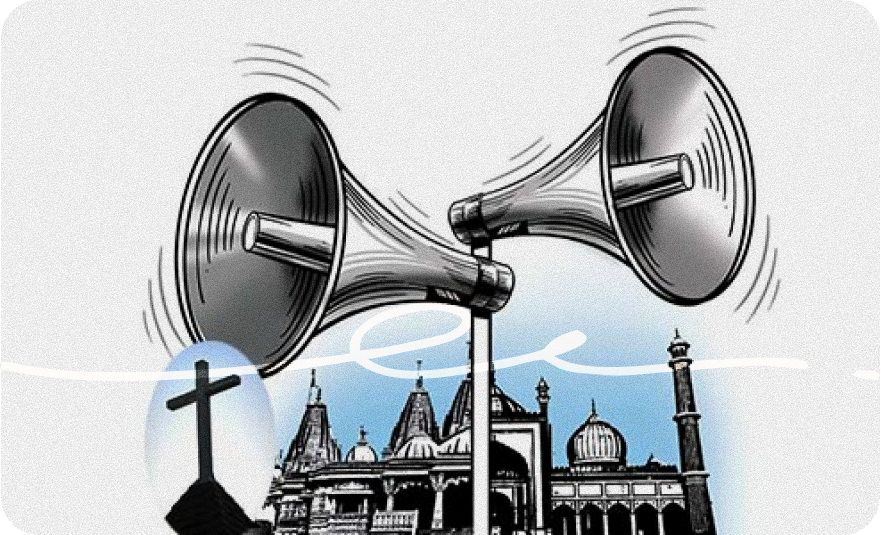
That single encounter stayed with me, not because it was unique, but because it is so ordinary. In neighbourhoods across Nigeria from the bustling streets of Lagos to the tighter quarters of Ibadan, Enugu, and Abuja religious sound has become part of the urban soundtrack. Churches squeezed between residential buildings mount loudspeakers on external walls or windowsills. All night vigils, deliverance sessions, and amplified sermons spill into bedrooms, kitchens, and study spaces. The gospel, for many residents, arrives by force.
Complaints are met with the same spiritual defence: “Are you not a Christian? Why are you against prayer?” The question does more than dismiss discomfort. It frames any objection as evidence of weak faith or outright hostility to God. It shuts down conversation before it can begin.
What makes this more complicated is the collision of two powerful forces explosive urban growth and fierce religious competition. Nigeria’s cities are filling up fast. Housing has not kept pace, so people live in ever closer proximity face-me-I-face-you apartments, student hostels, and compounds where walls are thin and lives overlap. At the same time, churches multiply. In a competitive spiritual marketplace, visibility and volume become tools for survival. A powerful sound system signals a “firebrand” ministry. It draws members, asserts presence, and reassures the faithful that God is moving powerfully. Loudness starts to feel like proof of authenticity.
But this creates an unintended cost. The same faith that teaches love for neighbour sometimes ends up testing it. Jesus’ wilderness prayers were moments of private communion, not broadcasts imposed on sleeping people. The early church gathered in homes without the means or apparent desire to dominate entire streets. Today, genuine devotion mixes with practical strategies for growth, and the result is a faith that can feel domineering in shared spaces.
There is also the quiet inequality beneath the noise. Those who can afford better insulated homes, generators, or relocation suffer less. Students in hostels, young workers in cramped apartments, and low-income families absorb the full weight of disrupted sleep, fractured concentration, and mounting frustration. The burden is not evenly shared.
This is not only a Christian issue. In Muslim communities, amplified calls to prayer raise similar questions. The pattern crosses lines when sacred expression overflows into civic space without restraint, and tolerance frays. Nigeria’s celebrated pluralism demands practical compromises that many religious actors seem reluctant to make.
I am not asking for the silencing of worship. Prayer, preaching, and praise are vital. The real question is one of balance and maturity. Does my freedom to express faith completely override my neighbour’s right to rest, study, or simply exist in peace? Can spiritual power be shown through consideration as much as through volume?
Some congregations already point the way using indoor systems responsibly, observing reasonable hours, or creating dedicated prayer spaces away from dense housing. These quiet examples deserve more attention. They suggest that true reverence sometimes sounds like restraint.
The man praying behind my window that night probably sought real encounter with God. His choice of location, however, pulled everyone nearby into his devotion whether they wanted it or not. In a country where faith shapes so much of daily life, we must ask harder questions: Are we drawing people toward God, or quietly pushing them away through insensitivity? When does “being salt and light” become noise that dims the very message we carry?
In tightly packed Nigerian cities, genuine neighbourly love might require turning down the volume not out of shame, but out of care. Sometimes the most powerful testimony is the one that respects the space of others.