
To focus only on failures from above is to miss the vibrant, chaotic comedy unfolding on the other side of the line. The institution lacks a map; the Nigerian consumer often lacks a manual.
We are a society raised on Hollywood action films, which means a surprising number of people genuinely believe that, in trouble, they should dial 911. People press the American digits out of muscle memory inherited from television, often unaware that the actual national emergency number is 112.
When the lines do connect, an entirely separate comedy of errors plays out. Because the lines are toll-free, they do not just receive desperate calls from accident scenes; they receive the raw, unpolished soundtrack of Nigerian daily life. Callers are routinely shocked to hear an actual human voice answer the phone, resulting in a sudden, panicked click as they hang up.
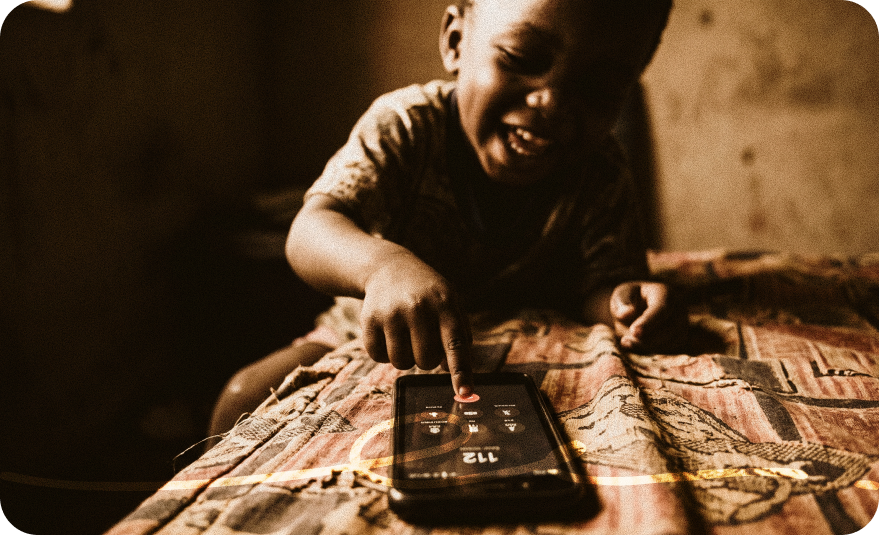
Worse still, while the antics of children on a toll-free line are entirely predictable, they become easier to understand when viewed through a child's eyes.
To many Nigerian children, a smartphone is a highly guarded luxury, usually snatched away by parents the moment homework is done. But a toll-free number—one that requires no airtime, no permission, and bypasses the lock screen—is an open door to an unsupervised playground.
Driven by an insatiable curiosity about this rare, unpunished access to the digital world, children repeatedly dial 112. It becomes a game of dare. They want to hear what lies on the other side of the "government number." When they hear a real human voice answer, a profound stubbornness kicks in.
They do not just hang up; they push back.
They call back ten, twenty, thirty times in a single afternoon, hidden behind the anonymity of the receiver, giggling into the mouthpiece, trading dares with their friends in the schoolyard or on the veranda.
It is their first raw interaction with an arm of the state, and because it costs them nothing, they treat it with the absolute flippancy of a toy.
This is where the emotional burden shifts heavily onto the dispatch agents, who find themselves forced into the role of accidental, over-exhausted educators.
An agent sitting in that room is already drowning in professional anxiety, trying to guess the location of a fatal crash on an unmapped expressway. Yet they find themselves spending hours of their shift trying to reason with seven-year-olds.
They do not simply yell or cut the line, because they know that a child screaming on a phone could occasionally be a real victim of a domestic crisis.
Instead, they use precious airtime trying to explain the philosophy of an emergency service to a child who has never seen an ambulance in real life.
They explain the concept of the "critical window"—why the phone line must stay clear, how a prank call blocks a dying person from reaching help, and when it is actually appropriate to dial those three numbers.
They try to plant a seed of civic responsibility in a child's mind before the default Nigerian cynicism can take root.
It is an exhausting, tragic pedagogy.
The agent is trying to teach a lesson on public institutions to a child whose country has given them no reason to believe institutions work, using a free phone line as a blackboard while the real emergencies of the state wait in a queue behind the laughter.
The children are not trying to sabotage the system.
They are trying to understand it.
And perhaps that curiosity, irritating as it may be in the moment, is far less troubling than the behavior of the adults who should already know better.
It is the behavior of the adults that elevates the dispatch log into pure satire.
A significant portion of Nigerian adults do not call the emergency line because they have an emergency. They call because they are profoundly skeptical that anything run by the state could actually function.
It is a psychological audit disguised as a phone call.
An adult will sit on their veranda, dial 112 just to see what happens, and when a dispatcher answers with a crisp, "112 Emergency Services, what is your location?" the caller enters a state of sheer confusion.
Faced with actual institutional responsiveness, the adult brain short-circuits.
Some freeze and breathe heavily into the mouthpiece before hanging up like a terrified stalker.
Others get aggressively defensive, barking, "I am just checking if you people are awake!" before slamming the phone down.
Others still treat the line as a general helpdesk, asking the dispatcher why the electricity is off in their neighborhood.
Others want to know why MTN has deducted their airtime, why Glo's network has disappeared, whether an emergency dispatcher can somehow intervene in a dispute with their bank, or if the state can help reverse a mistaken bank transfer.
There is an incredible irony here.
The dispatchers spend half their shifts filtering through a barrage of deliberate nonsense.
This constant stream of pranks and "test calls" by full-grown adults does something insidious: it dulls the agents' responses.
When 75 percent of your incoming calls are citizens treating a life-saving line like a toy, the 25 percent that represent a bleeding driver on the Long Bridge get buried beneath a mountain of static.
The breakdown of trust is nearly complete.
Because the public expects little from the state, they treat the state's infrastructure with reciprocal flippancy.
The system is not just starved of tools; it is choked by the very public it is trying to save, caught in a cynical loop where dysfunction and incompetence become a self-fulfilling prophecy.