
"Afia mma, leave the bathroom now. Let someone else come and take their bath."
Someone was always waiting for something in our house. The bathroom, the toilet, a cup someone else had used, a book that hadn't been returned. We learned to wait our turn.
We lived in a bungalow in a large compound shared with about eight or ten other tenants. My father worked at an oil company, and we lived comfortably compared with some of the families around us. Tiles weren't common then, so our living room had a rug carpet that became very hot during the dry season. In the middle of the room stood a wooden centre table. During the day, it held my father's food. At night, when there was no electricity, we placed a kerosene lantern on it, and its light reached into the rest of the house.
There were two bedrooms, their floors covered with rubber carpets printed with fine flower designs. When the house became too hot, we sometimes lay on them because they felt cool against our bodies.
The compound had plenty of children, and we moved freely between one another's houses. We visited to watch television and played Ludo, Scrabble, and Whot. When we played jackpot with Whot cards, my sister and I both wanted Mary as our partner. She was good at signalling, and neither of us wanted the other to have her.
"I want Mary to be my partner."
"No. Mary was your partner last time," my sister objected.
"So what?"
"Orrrh. I'm not playing again."
"Don't play nau. What's my business?"
We would carry on arguing and playing, as though neither of us had just threatened to ruin the game.
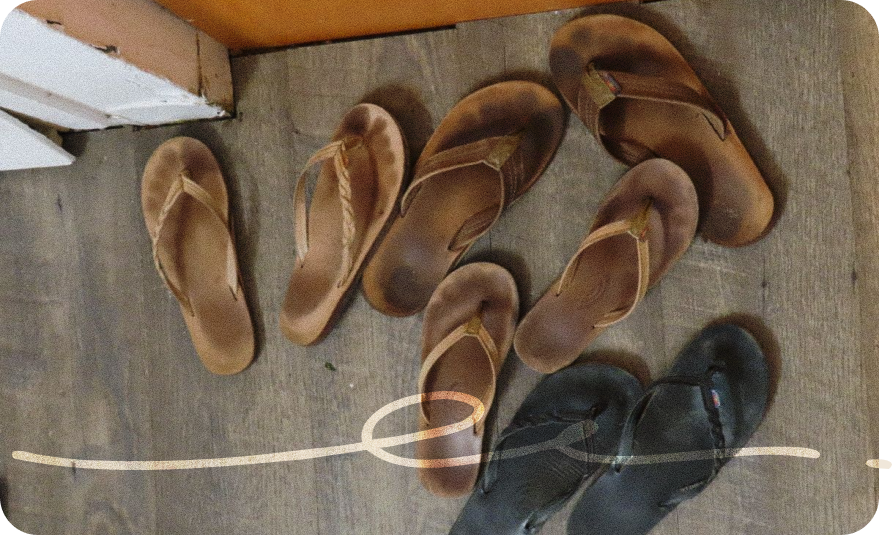
My mother had a habit of bringing people home. I could leave for school and return to find a stranger in the house, someone I had never seen before. Sometimes, I noticed unfamiliar slippers at the door before I knew there was someone new to meet.
"Who is this?"
"My friend's daughter."
"Why is she here?"
"She will stay with us for some time."
There was a girl, Blessing, who came the year I was nine and was still sharing our bathroom schedule when I finished primary school. By then nobody introduced her as a guest anymore. People came to stay, and some became part of the household without anyone deciding it.
With so many people around, there was usually someone to talk to or play with. Finding a place to be alone was another matter.
My siblings and I attended some of the most expensive private schools in the area, while some of our neighbours' children went to public schools. We went to school in a bus, and my mother took particular pride in that. When she quarrelled with someone, she could bring it up.
"Can't you see my children are all in private schools? Can you even afford Okada, talk less of school bus?"
She said it as though the school bus settled the argument.
When I was sixteen, my first crush broke my heart. I don't remember having anywhere in the house where I could cry without someone noticing. By evening, I had broken the glass globe of our kerosene lantern.
Breaking that globe was a serious offence in our house. My mother scolded me, though not as much as I had expected. I cried while she scolded me. I was heartbroken, and now I was being scolded too. I had nowhere to put either feeling.
One morning, my brother and I woke early. We were the only children in the house still in primary school, and our school bus usually came around seven. It was about five when another fight began. Two neighbours came out and tried to separate my parents. It wasn't the first time someone outside the house had stepped in.
I went outside to brush my teeth.
I think I was humming Jesus Loves Me, This I Know when I heard running behind me. Before I could turn around properly, gboosh! A steel lantern hit me on the forehead.
Something wet ran down my face and onto my white nightwear. I thought it was kerosene. I wiped my forehead with my hand and looked at it. It was blood.
I began to cry and scream. It kept coming, gushing from my forehead like a spring.
After my wound had been treated and plastered up, my mother told me what to say if anyone asked about it.
"If anybody asks you what happened, say you fell from Okada, you hear?"
She held her ears while saying it.
The next day at school, my teacher called me over.
"What happened to your head?"
I was about to tell her when I remembered my mother's voice and how she had held her ears while giving me the instruction.
"I fell from a bike."
"Hmmm. Are you sure?"
"Yes, Aunty."
"Sorry. Oya, go and sit down."
The plaster on my head didn't stop my parents from fighting and throwing things. They continued as they always had.
As I grew older, I began to wonder why our family was like that. One day, I asked my mother, "Mummy, why is our family like this? Look at these other people, they don't even have money but they live in peace."
"You're a child. When you grow up, you will understand."
Sometimes, my parents could be so peaceful. My mother loved jewellery and perfumes, and my father always bought them for her. She attended parties every weekend, so she always had use for them.
After a particularly bad fight, my father called our church pastor to intervene. Later, my mother, my sister, and I were in the kitchen making fufu when my sister asked her why she had married my father.
"My parents told me to marry him," she said.
"Why don't you leave if you're not happy?" I asked.
"I can't leave after suffering for another woman to come and reap the fruits of my labour."
And by the time I was older, almost done with secondary school, there were still people to share the bathroom with, unfamiliar slippers at the door, and games that ended in arguments over who would be whose partner. My mother still went to parties every weekend, and my father still bought her jewellery and perfumes. My parents still fought, sometimes throwing things at each other. I had learnt to keep my distance.
There was always something happening in our house.