I’m sitting at this salon going through Pinterest, looking for hairstyles I could make. The air conditioner blows cold against my face and once again, I’m grateful for my choice of clothing.
The woman beside me has been correcting the hairstylist for the past few minutes.
“Sister, curve this side like this.”
The stylist adjusts the hair.
“I said centre parting. This is side parting na.”
She parts it again.
I smile and return to my phone.
Then I hear a child crying.
She is sitting a few chairs away from me, her hair already halfway done, colourful beads clanging against one another every time she shakes her head. The woman making her hair says something to her that I cannot hear. The girl shakes her head harder.
The woman gets up and comes back with a Capri-Sun.
“Take this. Be a good girl and stop crying now. Okay?”
The little girl stretches out her hand and takes it. For a while, the salon is peaceful again. The air conditioner hums above us, someone is watching a video on her phone without earphones, and the woman beside me is still inspecting the centre parting in the mirror.
About twenty minutes later, the crying starts again.
“Nawa for you o. Why you dey cry like say them dey kill you?” the woman beside me says, hissing loudly.
The hairstylist looks at the child.
“Do you want another Capri-Sun and biscuits?”
She nods.
“How many Capri-Sun she want drink for this small hair?” someone says from across the salon.
The hairstylist gets up.
I watch her walk out.
I smile.
I think of Iyawo Photo.
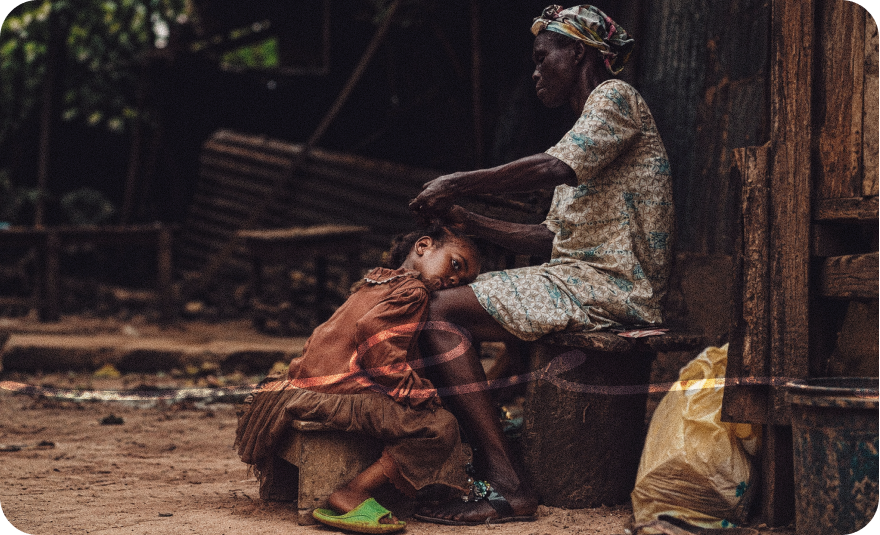
She lived not far from our house in Osapa London. It took about three minutes to walk to her house, and her salon was right in front of it. You could see children there from the road, their heads bent between someone’s knees, legs swinging from the little stools they sat on.
She was painfully thin. She had three tribal marks on each side of her face, six in all, and when we were children, we used to say she had fought a lion. The marks, we decided, were where its claws had caught her.
We never questioned this story.
The first thing you noticed when you entered her salon was the long sheet hanging on the wall, covered with pictures of hairstyles. It was our Pinterest before Pinterest. You could stand there and study the styles until you found one you wanted.
“What are you making?” one child would ask another.
“Patewo.”
“Why?”
“My teacher said we should make it.”
“Ah. Me, I’m making shuku.”
“Is it for school?”
“My mummy said I should make that.”
Then someone would point at the sheet.
“I want this one.”
Iyawo Photo would look up from whatever head she was working on.
“Which one?”
The child would point again.
“All back and base?”
“Yes.”
“Go and sit down.”
During school, there were styles like Didi, patewo and shuku. During holidays, the sheet became more interesting. Bob Marley. Twisting. Ghana weaving. Up-gel. The styles that were too much for school suddenly became possible when there was no uniform and no teacher checking your head.
Sometimes you already knew what you wanted before you got there. Other times you stood in front of that long sheet with the other children, arguing over which one looked better.
The salon was always busy. Mothers came, dropped their children off and left. Sometimes you wondered when they would return because there were already so many heads waiting.
And Iyawo Photo was good.
That was why they trusted her.
She could take a head that looked ordinary and turn it into something neat enough for a child to go to school the next morning and feel important.
One afternoon, a mother brought her daughter and left her with Iyawo Photo. The girl stood in front of the long sheet on the wall, looking through the hairstyles until she found the one she wanted.
“Bob Marley.”
Iyawo Photo looked at the picture.
“Bob Marley?”
“Yes.”
“Lọ kí o lọ jókòó.”
By the time her mother returned, the hair was finished.
The woman stopped at the entrance and stared at her daughter.
“Ah-ah! What is this?”
The girl touched one of the braids.
“I chose it.”
“Bob Marley? You want to go to school with this?”
She turned to Iyawo Photo.
“Please, loose it.”
Iyawo Photo looked at the hair, then at the mother.
“I won’t loose it.”
The woman frowned.
“Why?”
“No be your pikin choose this one?”
“But her school will not allow it.”
Iyawo Photo shrugged.
“Yọ ọ́ kúrò fúnra rẹ.”
The woman stared at her.
“Èmi?”
“Bẹ́ẹ̀ni.”
“I brought her here for you to make her hair.”
“And I never make the hair?”
“But I want you to loose it.”
“Mi ò ní yọ kúrò.”
The mother looked at her daughter’s head again. By then, the girl’s excitement had disappeared. She stood quietly, holding one of the long braids between her fingers.
The mother sighed.
“How will I remove all this?”
Iyawo Photo had already turned to the next child.
“Wá jókòó.”
The only thing was that you had to survive her hands first.
The stools were low kitchen stools, the kind that made your knees sit higher than they should. After a while, your back would begin to ache. You would shift your weight a little, then remember where you were.
“No move your head.”
“I’m not moving.”
“You dey move.”
You would straighten yourself.
Then the ìlarún would come out.
It had three long wooden prongs, and it went through the hair slowly, separating it into sections. If you moved your head again, Iyawo Photo would stop, grab your face and force it back into position.
Sometimes she turned it so hard that I was afraid she would twist my neck.
So I learnt to keep still.
She never asked if it hurt.
There was no, “Is it painful?”
No, “Are you okay?”
If your eyes watered, she kept going. If you complained about your back, you were still sitting on the stool. If you cried, the hair still had to be finished.
Soul Mate hair cream was another problem.
I hated the smell of it. It was strong enough to announce itself before she even opened the container, and when your hair was being braided while the sun was still up, the cream felt hot on your scalp.
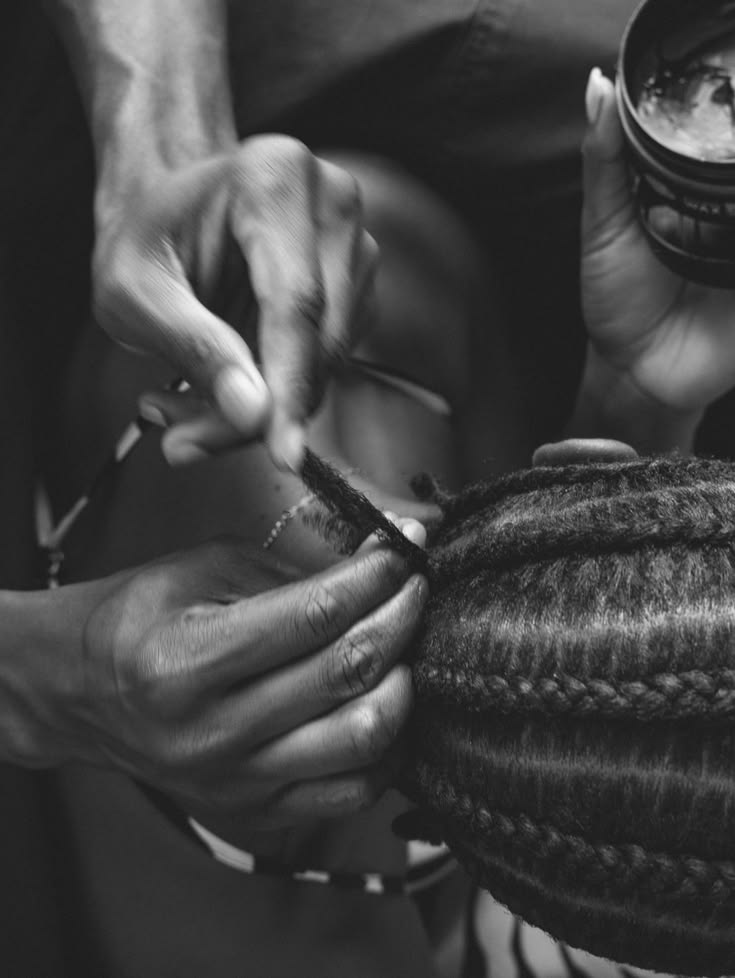
Iyawo Photo would scoop a handful into her palm and massage it into your hair.
“Ah!”
“Jẹ́ kí orí rẹ wà níbì kan.”
Her fingers continued.
There was never really a chance to object.
Then came the rubber thread.
She would hold the hair tightly and begin to plait, and the thread would pull at your scalp each time she tightened it. The loose ends kept whipping against your back. You would flinch every time one landed.
“Ṣe ìwà ara rẹ.”
Another whip.
You would sit still.
Another.
By then your back was hurting from the stool, your scalp was hot from the Soul Mate, and you were simply waiting for the moment she would finally say you were done.
But the end of the braiding was not the end.
There was still the hot water.
The ends of the braids had to go into it, and the vapour rose immediately, burning the scalp that was already sore from hours of pulling. You would lean away.
“Come here.”
You would try again.
The towel would go into the hot water, come out dripping, and then land on your head.
That was when some children screamed.
One child would begin to thrash, trying to escape, and Iyawo Photo would clasp her head between her thighs and continue.
“Stay there.”
The towel came down again.
You could cry.
You could scream.
You could shake.
The hair still had to be finished.
The dryer was another thing altogether.
It was big enough that you had to put your whole head inside it. It covered you down to your shoulders, and before she switched it on, Iyawo Photo would give you a foam headset to tie over your ears.
“Put this.”
You would put it on.
She would tighten it.
Then the dryer would begin.
At first, you sat there quietly, listening to the machine. Then the heat started building. The foam around your ears became hot. The headset began to hurt where it pressed against your head, and the heat kept rising until you could feel it inside your ears.
By the time she finally opened the dryer, your ears felt as hot as a pot.
And then there was Expression.
I was afraid of Expression attachments. I don’t remember why. I only remember that whenever I saw those packets, something inside me tightened.
One day I was crying because I was hungry.
Iyawo Photo opened a packet.
I saw the Expression.
Before I could understand what she was doing, she took some of the attachment and put it on my body.
I went berserk.
I screamed and cried and tried to get it off me.
“Ọmọ onígbèéraga.”
Years later, I am sitting in an air-conditioned salon, scrolling through Pinterest while a child is being bribed with Capri-Sun and biscuits to sit still.
By the time I finish making my hair, five empty packs of Capri-Sun are lying on the floor.
The little girl has finally stopped crying.
I watch the stylist bead the last few braids and think about how my mother could leave me at Iyawo Photo’s salon for hours without worrying.
Not because I didn’t cry.
I did.
Not because it didn’t hurt.
It did.
But Iyawo Photo had never needed Capri-Sun to make a child sit still.